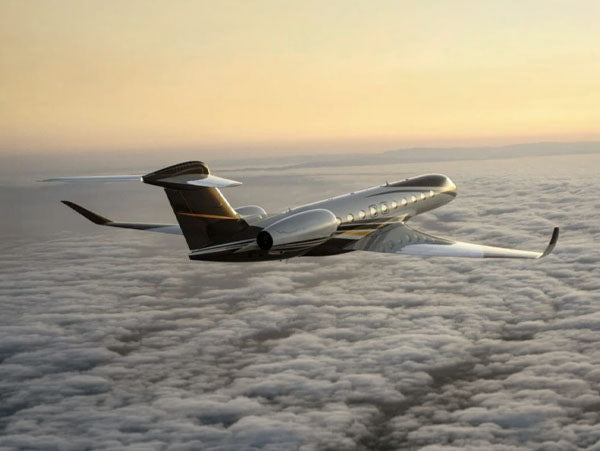
The business aviation world has been buzzing with anticipation for weeks. Embraer, the Brazilian aerospace giant, had been teasing what it called a major announcement in executive aviation — and on February 24, 2026, the company finally pulled back the curtain. Meet the Praetor 500E and Praetor 600E, the first significant evolution of Embraer's midsize and super-midsize business jet family since its debut at the 2018 NBAA convention.
But here's what makes this announcement particularly fascinating: Embraer didn't chase faster speeds or longer range. Instead, the company bet big on something arguably more important to the people actually sitting in the back of these jets — a radically reimagined cabin experience anchored by technologies typically reserved for aircraft costing tens of millions more.
A Cabin-First Philosophy
The original Praetor 500 and 600, which entered service in 2019, already stood out in their respective segments. The Praetor 600 boasts the longest range of any super-midsize jet at 4,108 nautical miles — enough to fly nonstop from London to New York. Both aircraft were the first in their class to feature full fly-by-wire flight controls with active turbulence reduction, a technology borrowed from Embraer's commercial aviation division. These are serious airplanes.
So when the company set out to evolve the platform, it asked itself a deceptively simple question. Alvadi Serpa Junior, Embraer's vice president of market and product strategy for executive jets, framed it this way: how do you unlock the greatest potential in the super-midsize category and push beyond what buyers expect?
The answer, it turns out, wasn't about squeezing another hundred nautical miles out of the fuel tanks. It was about transforming the nine or more hours passengers spend inside the cabin on a transatlantic crossing into something that feels less like air travel and more like a private living space — one that responds to your voice, adapts to your activities, and even gives you a window into the world that doesn't actually require a window.
The Smart Window: A 42-Inch Portal to Everywhere
The headline feature of the Praetor 600E is the Smart Window, and it's worth lingering on because nothing quite like it exists in the super-midsize category. Integrated into the left-hand side panel opposite the divan seating area, the Smart Window is a 42-inch, 4K OLED curved touchscreen display developed in collaboration with Lufthansa Technik.
It's not just a big screen bolted to a wall. The display is designed to serve as a multipurpose hub that fundamentally changes how the cabin's middle zone is used. Three externally mounted cameras feed real-time views of the outside world to the screen, effectively creating a panoramic digital window for passengers seated away from the aircraft's actual windows. For those who love the romance of watching the earth scroll by from altitude, it's an elegant solution that also addresses a practical limitation of business jet cabins — not every seat has a great view.
But the Smart Window's real trick is versatility. It functions as a cinema-grade entertainment screen for movies and gaming. It supports high-resolution video conferencing for business calls. And it integrates seamlessly with the aircraft's new cabin management system, allowing passengers to control lighting, shades, temperature, and entertainment from its touchscreen interface.
Jay Beever, Embraer's vice president of design operations, described the impact in spatial terms. The Smart Window effectively turns the second cabin zone into a "virtual third zone," he explained, giving the aircraft a sense of interior scale that belies its physical dimensions. In practical terms, it also shifts the power seat in the cabin. The principal passenger's preferred position traditionally has been the first forward-facing right-hand seat. With the Smart Window installed, Beever noted that the center seat on the divan — directly facing the display — becomes the new throne.
The Smart Window is available exclusively on the 600E, owing to the larger side bulkhead panels that accommodate its dimensions. Importantly, it's an option rather than standard equipment, and it's been engineered to install in front of the existing window panel, meaning future owners could remove it if desired.
Voice Commands and a New Digital Nervous System
Both the 500E and 600E receive a completely new cabin management system, swapping the previous Honeywell Ovation platform for Lufthansa Technik's Nice system. This is more than a simple upgrade — it represents a fundamental rethinking of how passengers interact with the cabin environment.
The Nice system integrates with a dedicated smartphone app that supports voice control, allowing passengers to manage lighting, window shades, entertainment, temperature, and airflow through spoken commands. But it goes deeper than basic voice activation. Passengers can create custom voice actions that control multiple cabin elements simultaneously.
The example Embraer gave during the unveiling paints a vivid picture: a passenger watching a movie can say "activate blue," and the system will simultaneously lower all window shades and shift the overhead LED lighting to blue, creating a cinematic atmosphere. When a video call comes in, the command "daylight mode" raises all shades and switches to bright white overhead lighting in seconds. As Beever put it, no one on the call would know the passenger had been watching a film moments earlier.
The lighting system itself supports approximately 16 million color variations through its RGB LED architecture, enabling everything from functional white illumination to mood-setting ambient tones. Embraer has even programmed nationality-themed presets — red, white, and blue for American passengers or green, yellow, and blue for Brazilian owners, among others.
Beyond voice control, the cabin features multiple physical touchpoints for system interaction. Touchscreens are built into the storage armrests at each seat, alongside USB-A, USB-C, and wireless charging ports. Redesigned overhead tech panels with simplified iconography and new flat air gaspers — engineered to push airflow through narrow slats rather than traditional twist-to-adjust nozzles — give passengers control without reaching for a phone. The new air vent design may seem like a small detail, but it required significant engineering effort to achieve a streamlined panel that also delivers more comfortable airflow within the tight confines of a business jet cabin.
Electric window shades round out the digital control suite, ensuring that the transition between lighting modes and outside views is seamless and instant.
Seats Redesigned from the Ground Up
Embraer took a notably different approach to seating with the E-series. Rather than iterating on the previous supplier-manufactured seats, the company partnered with Recaro Aircraft Seating to fully redesign the Praetor seats while also bringing manufacturing in-house to its Melbourne, Florida facility. This dual shift — new design partner and internal production — gave Embraer tighter control over features, aesthetics, and cost.
The results are substantial. Each seat features forward-tracking headrests, dual lumbar support, and an electric-assisted adjustment system with six independent points of movement. A button-press unlocks the seat for repositioning; releasing it locks the seat in place. There are no mechanical levers or pulleys. Three levels of cushion firmness accommodate different comfort preferences, and a larger leg rest extends the relaxation envelope for longer flights.
The fold-flat bed configuration in the forward cabin zone has been particularly refined. Previously, creating a sleeping surface required removing headrests from both seats and folding them together — a multi-step process that felt cumbersome. The new design reduces this to a 15-second, single-seat operation, making the transition between upright seating and rest mode fast enough to be practical during a flight.
Embraer is offering the seats across three cabin collections — Executive, Artistry, and Signature — at different price points. Options include a wider palette of leather colors, multiple stitching patterns, and custom trim elements like carbon-fiber accents.
Galley and Practical Upgrades
Long-range business jets live and die by the details of daily use, and Embraer addressed several practical pain points with the E-series.
On the 600E, the galley has been meaningfully expanded. Embraer relocated the stowage position of the cabin-galley pocket door from the right to the left side of the forward bulkhead, freeing up several inches of additional galley length. That extra space translates to a waste bin that is 30 percent larger and a chiller that is 50 percent bigger — improvements that directly affect the aircraft's ability to serve full meals on extended missions. The ice drawer has also grown, a seemingly minor upgrade that matters on nine-hour transatlantic legs.
The 600E also introduces an optional crew lavatory positioned within a storage cabinet behind the cockpit. This means pilots no longer need to walk through the passenger cabin to use the rear lavatory — a feature that charter and fractional operators in particular are expected to value, as it maintains the privacy and uninterrupted experience passengers expect.
On the smaller 500E, the refreshment center has been similarly redesigned for greater storage, disposal capacity, and catering capability. The 500E also receives a meaningful performance-adjacent upgrade: a maximum zero fuel weight increase to 26,511 pounds, which boosts maximum payload by 15 percent to 3,363 pounds. Existing Praetor 500 owners can retrofit this upgrade.
Flight Deck Enhancements
While the cabin dominates the narrative, Embraer hasn't neglected the people up front. Both E-series models add a Runway Overrun Awareness and Alerting System (ROAAS), which provides pilots with enhanced situational awareness during landing operations. This is a meaningful safety feature that helps prevent one of the more common categories of runway incidents. Notably, existing Praetor owners can upgrade to the ROAAS system as a retrofit.
The fly-by-wire flight controls, active turbulence reduction, and Enhanced Vision System that distinguish the Praetor family all carry over unchanged. Performance figures remain the same as well — the 600E retains its 4,108-nautical-mile range, and both aircraft maintain the steep-approach and short-field capabilities that give them access to challenging airports like Aspen, Jackson Hole, and Santa Monica.
Pricing, Certification, and the Competitive Landscape
The Praetor 500E is listed at $21.645 million, representing a five to six percent increase over the outgoing model. The 600E starts at $25.795 million, a seven to eight percent premium. Given the scope of the cabin overhaul, the price increases are relatively modest.
Certification is expected by the end of 2026, with first deliveries slated for the first quarter of 2029 — which Embraer says represents the next available delivery slots, a reflection of the strong demand environment. The 500E and 600E will fully replace the current Praetor 500 and 600 in the lineup, and Embraer has stated there are no plans to offer the cabin upgrades as a retrofit package for existing Praetor aircraft (with the exceptions of the ROAAS and the 500's zero fuel weight increase).
The competitive context matters here. The Praetor E-series goes up against Bombardier's Challenger 3500 and Challenger 650, Dassault's Falcon 2000 family, the Gulfstream G280, and Textron Aviation's Cessna Citation Latitude and Longitude. In this field, the Praetor 600 already distinguishes itself on range and fly-by-wire capability. The E-series cabin updates are clearly designed to close any remaining gap in perceived luxury and technology, bringing features that are more commonly associated with large-cabin or ultra-long-range jets down into the super-midsize price bracket.
Riding a Wave of Demand
The timing of this launch is no accident. Embraer's executive aviation division is in the midst of a historic run. The company closed 2025 with a record firm-order backlog of $31.6 billion across all divisions — a 20 percent year-over-year increase — with the executive aviation segment alone accounting for $7.6 billion, an all-time high. The division delivered 155 business jets in 2025, also a record, with both the Praetor 500 and 600 seeing strong year-over-year delivery increases.
The broader market dynamics are equally favorable. Demand for super-midsize jets has been particularly robust since the pandemic reshaped travel patterns, and industry forecasts suggest medium jets will account for roughly a third of all business aviation deliveries over the next decade. Landmark orders — including Flexjet's $7 billion commitment for Embraer executive jets — underscore the depth of buyer appetite.
What It All Means
The Praetor 500E and 600E represent a clear statement of intent from Embraer. Rather than chasing incremental performance gains on an already capable platform, the company invested deeply in the passenger experience — the part of the aircraft that owners and charter passengers actually live with for hours at a time.
The Smart Window, in particular, feels like a genuinely forward-thinking feature. It's easy to dismiss a big screen in a private jet as a luxury gimmick, but when it's integrated into the cabin management ecosystem, fed by external cameras, and paired with voice-activated mode switching, it becomes something more: a tool that makes a super-midsize jet cabin functionally larger and more versatile than its physical dimensions suggest.
Whether the market embraces these innovations with the same enthusiasm as Embraer's engineering team remains to be seen. But with a record backlog, strong delivery momentum, and a competitive landscape that rewards differentiation, the Brazilian airframer has positioned itself well to find out. The first owners who take delivery in early 2029 will be the ultimate judges — and they'll be doing so from the comfort of a seat that was entirely rethought, in a cabin that listens to their voice, bathed in any of 16 million shades of light.